Eye allergies develop when the immune system overreacts to substances such as pollen, dust mites, mould, or animal dander. This reaction inflames the conjunctiva, the thin membrane covering the white part of the eye and inner eyelids. Doctors call this condition allergic conjunctivitis.
Itching is the symptom that most strongly suggests an allergy. The eyes may also become red, watery, swollen, or sensitive to light. Unlike infectious conjunctivitis, eye allergies usually affect both eyes and do not spread between people.
An ophthalmologist can identify the cause and recommend suitable eye allergy treatment. At Shankar Jyoti Netralaya, recognised as the best eye hospital in Patna, patients can receive a detailed eye examination and treatment based on their symptoms.
This article explains eye allergy causes, symptoms, types, treatments, home-care measures, and warning signs.
What are Eye Allergies?
Eye allergies are inflammatory reactions caused by the immune system’s response to an allergen. They mainly affect the conjunctiva and are therefore also called allergic conjunctivitis.
When an allergen reaches the eye surface, immune cells release histamine and other inflammatory substances. These chemicals enlarge small blood vessels and irritate nearby nerves. The reaction produces itching, redness, watering, and eyelid swelling.
Eye allergies usually affect both eyes. They may occur alone or alongside nasal allergy symptoms, including sneezing, congestion, and a runny nose. People with asthma, eczema, hay fever, or a family history of allergies may have a higher risk.
Unlike viral or bacterial conjunctivitis, allergic conjunctivitis is not contagious. It cannot spread through towels, touch, coughing, or close contact.
What are the Different Types of Eye Allergies?
The main eye allergy types include seasonal allergic conjunctivitis, perennial allergic conjunctivitis, contact allergic conjunctivitis, vernal keratoconjunctivitis, and atopic keratoconjunctivitis.
The different types of eye allergies vary in their triggers, duration, severity, and effect on the cornea.
| Type | Common Triggers | Usual Pattern | Key Features |
|---|---|---|---|
| Seasonal allergic conjunctivitis | Grass, tree, and weed pollen | Appears during specific seasons | Itching, redness, watering, sneezing |
| Perennial allergic conjunctivitis | Dust mites, mould, animal dander | Can occur throughout the year | Persistent, generally milder symptoms |
| Contact allergic conjunctivitis | Cosmetics, eye drops, lens solutions | Develops after contact with a product | Itching, redness, eyelid irritation |
| Vernal keratoconjunctivitis | Environmental allergens and immune factors | Recurrent in warm weather | Severe itching, thick mucus, light sensitivity |
| Atopic keratoconjunctivitis | Associated with atopic dermatitis | Long-lasting or recurrent | Eyelid eczema and inflammation |
| Giant papillary conjunctivitis | Contact lenses, exposed sutures, ocular prostheses | Continues while irritation persists | Mucus, lens intolerance, bumps under eyelids |
Seasonal and perennial allergic conjunctivitis are the most common forms. Vernal and atopic keratoconjunctivitis can affect the cornea and require specialist care.
What Causes Eye Allergies?
Common eye allergens include pollen, dust mites, mould spores, animal dander, cosmetics, and contact lens solutions.
Common eye allergy causes include:
- Tree, grass, and weed pollen
- House dust mites
- Mould spores
- Animal dander
- Cosmetics and facial products
- Preservatives in eye drops
- Contact lenses or lens solutions
- Air pollution and smoke
- Workplace allergens
Smoke, chlorine, perfume, and air pollution can also irritate the eyes. However, irritation does not always involve an immune-mediated allergy. An eye examination may help distinguish allergic conjunctivitis from irritant conjunctivitis, dry eye, and infection.
What Are the Symptoms of Eye Allergies?
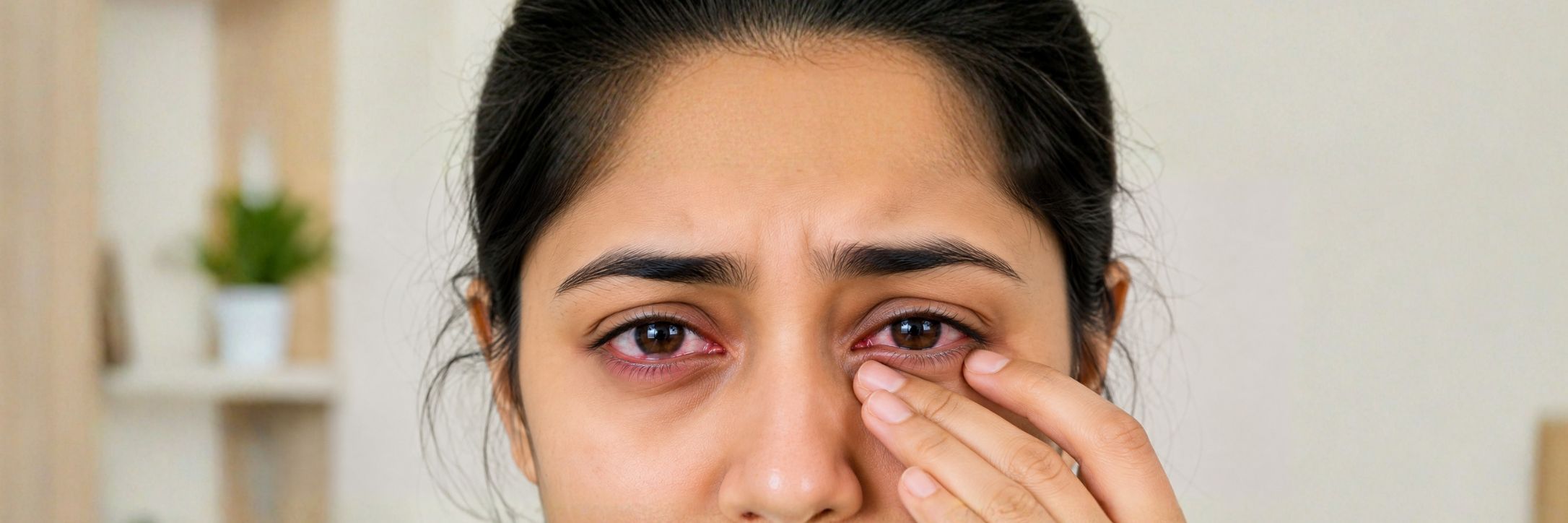
Eye allergy symptoms include itching, redness, excessive watering, burning, and eyelid swelling. Symptoms usually affect both eyes and may begin soon after allergen exposure.
Common symptoms include:
- Persistent eye itching
- Red or bloodshot eyes
- Clear, watery discharge
- Puffy or swollen eyelids
- Burning or stinging
- A gritty sensation
- Mild sensitivity to light
- Stringy mucus
- Temporary blurred vision caused by tears
- Sneezing or nasal congestion
Thick yellow or green discharge, eyelids stuck together, and symptoms beginning in one eye may suggest an infection instead.
Severe pain, marked light sensitivity, or persistent loss of vision does not fit simple allergic conjunctivitis. These symptoms need urgent assessment.
Dust Allergy in Eyes: Causes and Symptoms
Dust allergy in the eyes commonly results from exposure to dust mites rather than dust particles alone. Mite waste and body fragments can trigger allergic inflammation.
Dust mites live in mattresses, pillows, carpets, curtains, and upholstered furniture. Cleaning may disturb these particles and release them into the air. This explains why dust allergy eyes may become itchy or watery while sweeping, changing bedding, or entering a dusty room.
Symptoms may include:
- Itchy and watery eyes
- Redness in both eyes
- Puffy eyelids after waking
- Sneezing and nasal blockage
- Symptoms that recur indoors
- Worsening during cleaning
Reduce exposure by washing bedding regularly, using dust-resistant mattress covers, and damp-dusting surfaces. A dry broom may spread allergens through the air, so use a damp cloth or filtered vacuum where possible.
Pollen Allergy in Eyes: What You Should Know
Pollen allergy in the eyes develops when airborne pollen lands on the conjunctiva. Symptoms may increase during particular flowering seasons or on dry, windy days.
Ways to limit pollen exposure include:
- Keep windows closed when pollen levels are high.
- Wear wraparound sunglasses outdoors.
- Wash your face after returning home.
- Change clothes after prolonged outdoor exposure.
- Avoid rubbing the eyes.
- Shower before sleeping when exposure has been heavy.
- Dry washed clothes indoors during high-pollen periods.
Preventive allergy eye drops may work better when started before the expected allergy season. Patients should discuss the correct timing and product with an eye doctor.
Red Eyes From Allergies: Why Does It Happen?
Red eyes from allergies develop because histamine widens small blood vessels in the conjunctiva. The enlarged vessels become more visible against the white part of the eye.
Histamine also stimulates nerve endings and tear production. This creates the familiar combination of redness, itching, and watery eyes. Rubbing provides brief relief but releases more inflammatory substances and worsens swelling.
Allergic redness generally affects both eyes. It may improve after avoiding the trigger or using prescribed anti-allergy treatment.
Redness can also result from infection, dry eye, corneal injury, glaucoma, or inflammation inside the eye. Seek prompt care if redness occurs with severe pain, reduced vision, headache, nausea, or marked light sensitivity.
How Are Eye Allergies Diagnosed?
An ophthalmologist diagnoses eye allergies by reviewing symptoms, possible triggers, and findings from an eye examination. Most patients do not need laboratory testing.
The doctor may ask:
- When did the symptoms begin?
- Do they affect one eye or both?
- Is itching the main complaint?
- Do symptoms follow a seasonal pattern?
- Are sneezing, asthma, or eczema present?
- Does the patient use contact lenses?
- Have new cosmetics or eye drops been introduced?
- Is the discharge watery, stringy, or thick?
During the examination, the doctor checks the conjunctiva, eyelids, tear film, cornea, pupils, and vision. Magnified examination with a slit lamp can reveal swelling, papillae beneath the eyelids, corneal involvement, or signs of infection.
Allergy testing may help when symptoms are persistent, severe, or linked to an unclear trigger. A skin-prick test or blood test can identify sensitisation to specific allergens, but results must match the patient’s exposure history.
Eye Allergy Treatment: How Are Eye Allergies Treated?
Eye allergy treatment combines allergen avoidance, lubricating drops, anti-allergy medicines, and specialist treatment for severe disease. The correct option depends on the allergy type and symptom intensity.
1. Lubricating Eye Drops
Artificial tears dilute allergens and inflammatory substances on the eye surface. They may also reduce burning, grittiness, and dryness.
Preservative-free products may suit patients who need frequent applications or react to preservatives. Lubricants improve comfort but do not block the allergic response itself.
2. Antihistamine Eye Drops
Antihistamine drops block the action of histamine. They can provide relatively quick relief from itching, redness, and swelling.
Some products combine an antihistamine with a mast cell stabiliser. This combination treats current symptoms and helps prevent further mediator release.
3. Mast Cell Stabiliser Drops
Mast cell stabilisers reduce the release of histamine and other inflammatory chemicals. They work best when used consistently before allergen exposure.
These drops may require several days of regular use before providing their full benefit. Doctors may recommend them for predictable seasonal symptoms.
4. Oral Antihistamines
Oral antihistamines may help when eye symptoms occur with sneezing or nasal congestion. However, some products can increase dryness and make eye discomfort worse.
Patients should discuss eye allergy medicine with a doctor or pharmacist, particularly if they have glaucoma, dry eye, other medical conditions, or take regular medicines.
5. Corticosteroid Eye Drops
Steroid drops can control severe allergic inflammation, but patients should use them only under ophthalmic supervision. Unsupervised or prolonged use can raise eye pressure, increase infection risk, and contribute to cataract formation.
6. Immunomodulating Treatment
Patients with vernal or atopic keratoconjunctivitis may need prescription medicines that control the immune response. These treatments can reduce dependence on steroid drops.
An ophthalmologist should monitor severe allergic eye disease because inflammation can damage the cornea.
| Treatment | Main Purpose | Important Point |
|---|---|---|
| Artificial tears | Wash away allergens and reduce dryness | Prefer preservative-free drops for frequent use |
| Antihistamine drops | Relieve itching and redness | Some provide short-term relief |
| Mast cell stabilisers | Prevent allergic chemical release | Work best with regular preventive use |
| Combination drops | Treat and prevent symptoms | Must be used as directed |
| Oral antihistamines | Treat eye and nasal symptoms | May worsen dry eye |
| Steroid eye drops | Control severe inflammation | Require ophthalmologist supervision |
| Immunomodulators | Manage chronic severe disease | Need prescription and monitoring |
Avoid using whitening or redness-relief drops for prolonged periods without advice. Some constrict blood vessels temporarily and may cause rebound redness after repeated use.
Eye Allergy Home Remedies for Symptom Relief
Eye allergy home remedies can reduce mild itching, swelling, and discomfort. They do not replace medical treatment when symptoms are severe or persistent.
Safe measures include:
- Place a clean, cool compress over closed eyelids.
- Rinse the face after exposure to dust or pollen.
- Use preservative-free artificial tears.
- Keep windows closed during high-pollen periods.
- Avoid rubbing the eyes.
- Stop wearing contact lenses until symptoms settle.
- Remove eye makeup before sleeping.
- Wash pillowcases and bedding regularly.
- Keep pets away from pillows and sleeping areas.
Do not place rose water, honey, lemon juice, tea, plant extracts, or homemade salt solutions inside the eyes. These products may introduce irritants or microorganisms.
Patients should also avoid sharing eye drops. The bottle tip must not touch the eye, eyelashes, fingers, or any surface.
How to Prevent Eye Allergies?
Preventing eye allergies involves reducing exposure to known triggers and using preventive treatment when prescribed. Complete avoidance may not be possible, but practical measures can reduce symptom frequency.
For Dust Mite Allergy
- Wash sheets and pillowcases regularly.
- Use allergen-resistant mattress and pillow covers.
- Reduce heavy curtains, carpets, and soft furnishings.
- Damp-dust surfaces instead of dry dusting.
- Use a vacuum with an effective filter.
- Control indoor humidity and repair damp areas.
For Pollen Allergy
- Monitor local pollen levels.
- Limit outdoor activity during high-pollen periods.
- Keep car and home windows closed.
- Wear wraparound sunglasses outdoors.
- Wash the face and hair after exposure.
- Avoid drying clothes outdoors during peak seasons.
For Pet Allergy
- Keep pets out of bedrooms.
- Wash hands after touching animals.
- Clean floors and furniture regularly.
- Avoid touching the eyes after pet contact.
- Discuss long-term allergy management with a specialist.
For Contact Lens Users
- Follow the prescribed lens replacement schedule.
- Wash and dry hands before handling lenses.
- Never use tap water to clean lenses.
- Replace the storage case as advised.
- Stop wearing lenses during active redness or irritation.
- Discuss daily disposable lenses if allergies recur.
When Should You See an Eye Doctor for Eye Allergies?
See an eye doctor when symptoms persist, recur frequently, or fail to improve with basic measures. Pain, light sensitivity, or vision changes require prompt assessment.
Book an eye examination if you experience:
- Severe or worsening redness
- Eye pain
- Sensitivity to light
- Blurred vision that does not clear after blinking
- Thick yellow or green discharge
- Symptoms affecting only one eye
- Contact lens-related redness
- A foreign-body sensation
- Recurrent eyelid swelling
- Symptoms lasting more than several days
- Poor response to allergy eye drops
- Frequent dependence on redness-relief drops
Eye pain, sensitivity to light, or vision changes are not usual signs of a simple eye allergy and may indicate a more serious condition. Patients can consult one of the best eye doctors in Patna at Shankar Jyoti Netralaya for a detailed examination, accurate diagnosis, and appropriate treatment.
Frequently Asked Questions
What does allergic conjunctivitis look like?
Allergic conjunctivitis usually makes both eyes appear red, watery, and mildly swollen. The eyelids may look puffy, while the conjunctiva can appear raised or glassy. Itching is a defining symptom. Thick pus is less characteristic and may suggest bacterial infection rather than an allergic reaction.
How do you treat eye allergies?
Eye allergies are treated by avoiding identified triggers and reducing inflammation. Cool compresses and artificial tears may relieve mild symptoms. Antihistamine or mast cell stabiliser drops can control itching and redness. Severe or persistent disease may require prescription treatment and monitoring by an ophthalmologist.
Which eye drops are best for eye allergies?
The best allergy eye drops depend on symptom severity, duration, dry-eye status, and other medical conditions. Antihistamine drops provide faster relief, while mast cell stabilisers support prevention. Combination drops can offer both actions. Steroid drops should never be started without an ophthalmologist’s prescription and supervision.
How can you heal allergic conjunctivitis at home?
Mild allergic conjunctivitis may improve with allergen avoidance, cool compresses, and preservative-free artificial tears. Wash your face after outdoor exposure and stop wearing contact lenses during active symptoms. Do not rub your eyes or apply homemade liquids. Persistent redness, pain, or blurred vision needs medical assessment.
How long do eye allergies last?
Eye allergies may last from several hours to weeks, depending on allergen exposure. Seasonal symptoms can recur throughout the pollen season, while dust mite or pet allergies may continue year-round. Symptoms generally improve after avoiding the trigger and using suitable treatment, but chronic allergic disease needs specialist management.
Are eye allergies harmful?
Most eye allergies cause discomfort without damaging vision. However, severe forms such as vernal and atopic keratoconjunctivitis can inflame or injure the cornea. Repeated eye rubbing may also worsen irritation. Seek specialist care for pain, light sensitivity, reduced vision, thick mucus, or persistent symptoms.